
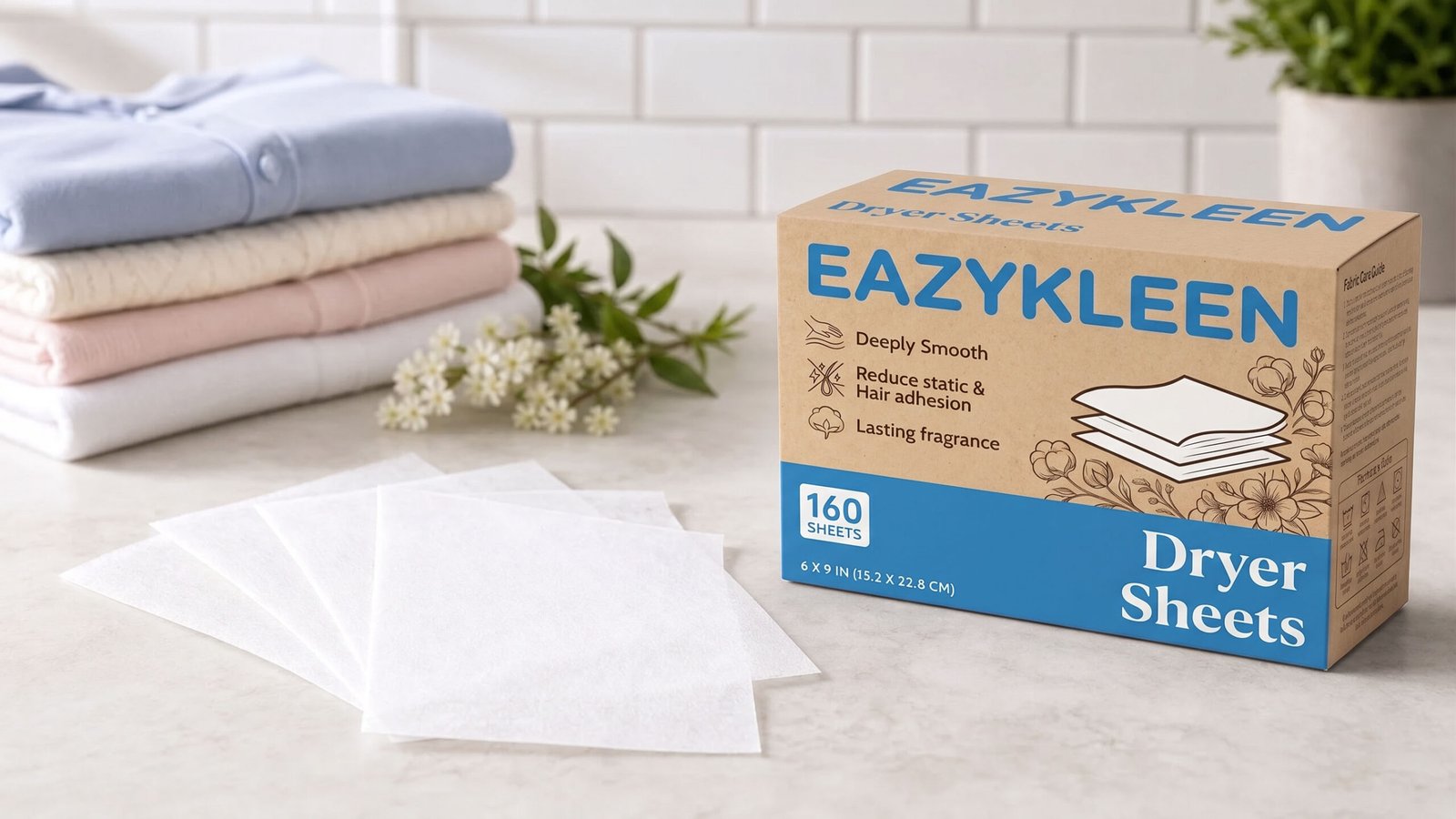
Dryer sheets OEM is contract manufacturing of dryer sheets to a brand’s own specification: the brand defines substrate, coating weight, sheet size, count, fragrance and packaging, and the factory produces to that spec under the brand’s label. Each line item below ends with wording you can put into a purchase order before you confirm a run.
Dryer sheets look like the simplest item in a laundry line — a thin nonwoven square with softening actives and fragrance. They are also the product most likely to change between your first sample run and the second batch, because most buyers never lock down the specs that drive quality. If you are sourcing private label dryer sheets, this guide gives you the specification-level language you need.
What “Dryer Sheets OEM” Actually Covers
A dryer sheets OEM program has three layers, each with its own spec decisions.
Substrate: the nonwoven carrier
The base sheet is a spunbond or meltblown nonwoven — typically polyester, polypropylene, or a blend. Substrate weight (GSM — grams per square meter) determines hand-feel and tensile strength. Ask your dryer sheet manufacturer for the specific GSM they quote, not just the finished-sheet weight.
Coating: the functional layer
The coating carries cationic softeners (which bond to negatively charged fabric fibers and reduce static) and the fragrance load. Coating weight — active material applied per sheet — is the biggest variable in performance and cost. More coating means more softening and more scent, but also raises residue risk. We cover coating weight in detail in Spec 4.
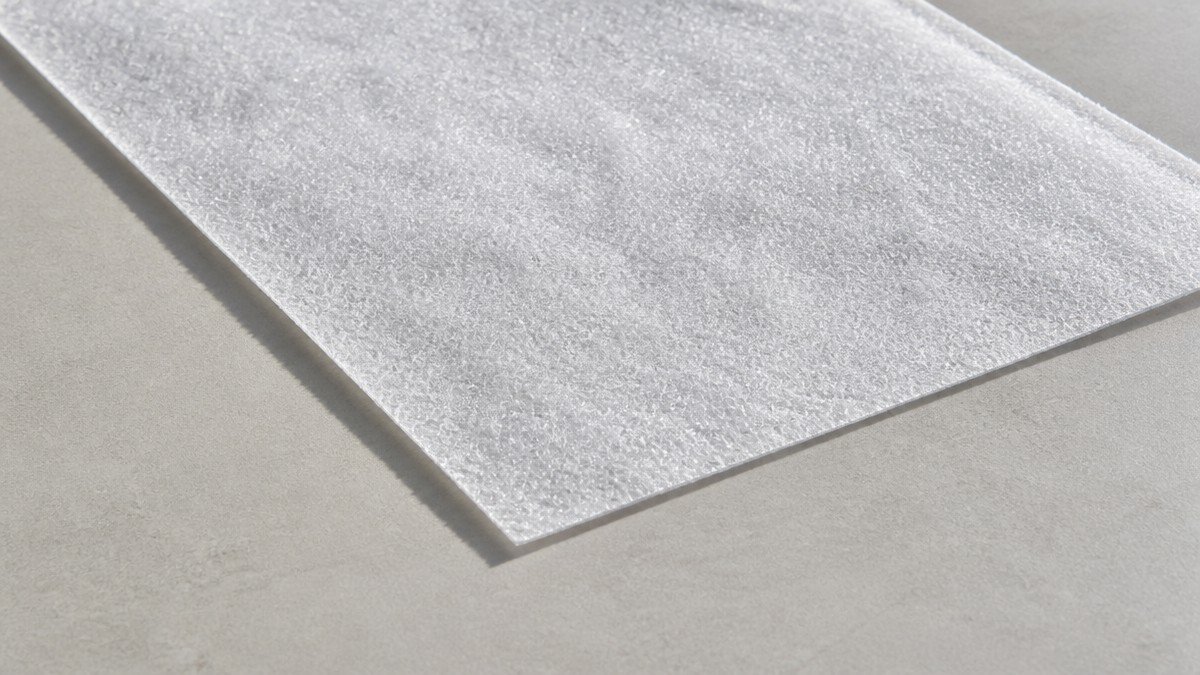
What your brand owns vs. what the factory owns
In OEM, you define the spec: substrate, coating weight, fragrance, dimensions, count, and artwork. The factory executes. In ODM, the factory provides a ready formulation you customize with scent and label. See OEM vs ODM for home care brands for a full breakdown.
Dryer Sheet Spec Sheet at a Glance
These are the six variables to lock before a dryer sheets OEM program moves from sample to mass production. Any supplier quotation that omits one of them cannot be compared line-for-line against another.
| Spec | What to specify | Why it decides quality and cost |
|---|---|---|
| Substrate | Spunbond or meltblown nonwoven; fibre type and GSM | Drives hand-feel, tensile strength and lint risk |
| Sheet size | Length × width in inches and cm | Affects dryer fit, perceived value and material cost |
| Count per pack | Sheets per box or pouch | Sets the consumer’s price-per-load maths |
| Coating weight | Active mass applied per sheet | Largest single driver of softening performance, residue and cost |
| Scent load | Fragrance percentage and heat-release profile | Determines perceived freshness after drying |
| Packaging | Board box or pouch; artwork ownership; barcode responsibility | Converts a manufacturing project into a retail-ready SKU |
Key Terms Buyers Get Wrong
Four terms get used interchangeably in sourcing conversations. They are not the same, and confusing them is how specifications drift.
- OEM (original equipment manufacturer) — you own the specification and the brand; the factory manufactures to your written spec.
- ODM (original design manufacturer) — the factory owns a ready formulation and you customise scent, colour and label around it.
- Private label — the commercial model: a product sold under a retailer’s or brand’s own name rather than the factory’s. It can be run as OEM or ODM.
- Substrate GSM — grams per square metre of the nonwoven carrier, measured separately from the finished, coated sheet weight. Quoting only finished-sheet weight hides both substrate and coating cost.
Why Dryer Sheets Still Earn Shelf Space
Dryer sheets are not a standalone product — they are part of a laundry bundle. Paired with laundry detergent sheets and scent booster beads, dryer sheets give a brand three touch-points across the wash cycle: cleaning, fragrance, and post-wash softening.
For retailers, a three-SKU laundry set fills more shelf space, increases basket value, and delivers a coherent brand experience. Dryer sheets also carry a strong repeat-purchase signal. If you are building a home care product range, dryer sheets are one of the easiest entries: low tooling investment, manageable SKU complexity.
Spec 1–3: Sheet Size, GSM and Sheet Count
These three specs are interrelated. Change one and you change the others’ economics.
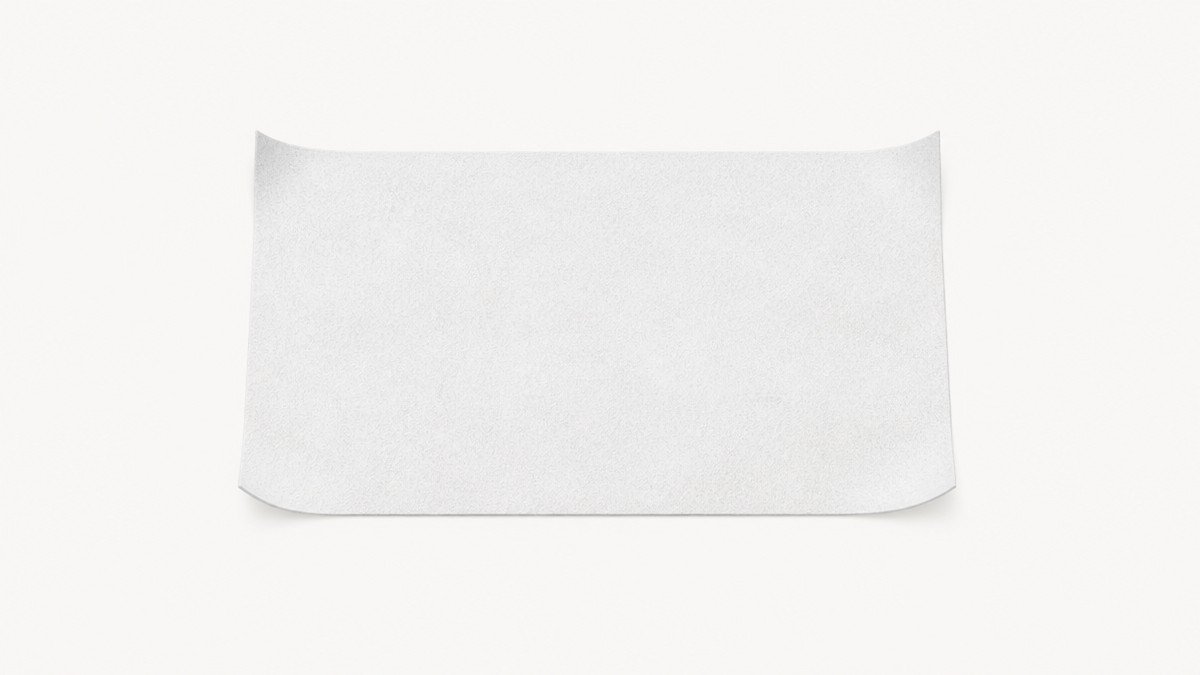
Sheet size and dryer fit
A common North American format — and the one Eazykleen manufactures — is 6 × 9 in (15.2 × 22.8 cm). Too small looks thin and distributes softener unevenly; too large increases cost and can bunch in the drum. The 160-sheets-per-box format at 6 × 9 in is a workable baseline — confirm it fits your market’s dryer capacity and price-point.
GSM and substrate thickness
GSM determines hand-feel and durability. Lower GSM costs less but can generate lint or tear; higher GSM feels more substantial but raises material cost. When comparing suppliers, ask each to report substrate GSM separately from finished-sheet weight — the two numbers tell you different things.
Count per pack and price-per-load logic
Sheet count drives the consumer’s price-per-load calculation. A 160-sheet box gives roughly 160 loads. More sheets per pack can justify a higher shelf price even when per-sheet cost is only marginally different. Match count to your target price band, not just the factory standard.
Spec 4: Coating Weight and Softening Performance
Coating weight is where most dryer sheets OEM programs diverge between sample and mass production — and where the biggest cost savings or quality losses hide.
What coating weight changes
Coating weight is the mass of softening actives and fragrance applied per sheet. Higher coating weight means more softening and more fragrance — and higher raw-material cost. When you receive a quotation, ask the supplier to state coating weight explicitly. If the spec sheet only lists “finished sheet weight,” you cannot separate substrate cost from coating cost — and you cannot compare two suppliers on equal terms.
Where residue complaints come from
Coating that is too heavy or applied unevenly leaves a waxy film on fabrics and sticky residue on the lint screen. The cause is usually the coating formulation (some cationic softeners transfer more) or the application method (dipping vs. spraying — dipping can oversaturate the center). Request a lint-screen residue test in your QC protocol; if a supplier cannot provide residue data, validate samples more carefully before committing.
Spec 5: Scent Load and Heat Behaviour
Dryer heat is harder on fragrance than wash water. Inside the drum the sheet sits in hot, dry air for most of the cycle, so the fragrance has to survive long enough to deposit on fabric rather than evaporate out through the vent.
Why dryer heat is harder on fragrance than wash water
Fragrance in a dryer sheet needs to release
at the right moment: early enough to deposit on fabric, but not so fast that it is gone before the cycle ends. Evaluate samples by running a full dryer cycle and assessing the scent on dried laundry — not by opening the box. For fragrance compliance across the laundry chain, our scent booster beads sourcing guide covers the same principles in the wash-cycle context.
Fragrance-free and low-scent options
Fragrance-free and low-scent dryer sheets are available. If you go this route, confirm two things: the formulation is tested to verify no perceptible fragrance after the dryer cycle, and the supplier can provide an allergen statement and IFRA documentation. See how to read an IFRA certificate for a full walkthrough.
Packaging: Box, Pouch and Retail Constraints
Packaging is where your private label dryer sheets stop being a manufacturing project and become a retail product.
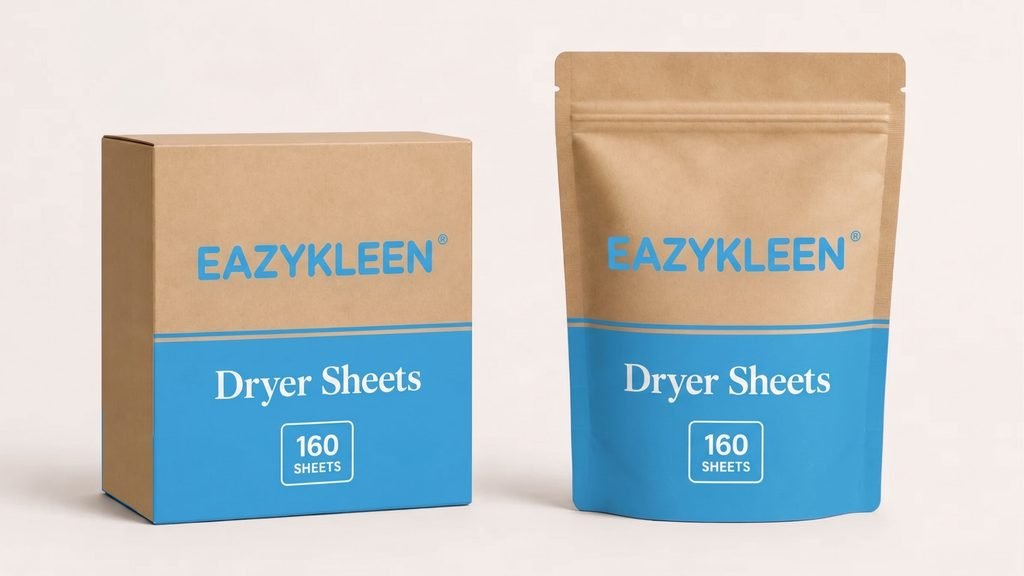
Board box vs. pouch formats
- Board box — rigid, stackable, strong shelf presence. Boxes protect sheets in transit but cost more per unit and add shipment weight.
- Stand-up or flow-wrap pouch — lighter, lower cost, compact. Often used for bulk dryer sheets wholesale or value-tier SKUs. Requires a reliable reseal mechanism, or sheets lose scent over time.
Big-box retailers often require a shelf-ready box; online-first brands may prefer the pouch for shipping efficiency.
Artwork, barcode and retail-ready requirements
Clarify who handles each: artwork preparation, barcode assignment, regulatory text placement, and print proof approval. In most OEM programs, the brand supplies artwork and the factory prints and assembles. Confirm the print method (offset, flexo, digital) early — it affects MOQ and color fidelity.
QC Tests to Put in Writing Before the First Run
Quality control needs to be documented before production starts — not debated after a shipment fails. Ask your supplier to confirm these tests in writing.
Static and softening performance
Run identical loads — one with the sheet, one without — and measure static cling and hand-feel. Specify fabric type, load size, dryer temperature, and cycle length. Request your dryer sheet manufacturer’s test protocol and compare it against your own evaluation.
Residue, transfer and lint
Check the lint screen for waxy buildup and dark fabrics for visible residue — both common consumer complaints, both preventable with controlled coating weight. See our quality process for the manufacturing controls behind consistent output.
Batch consistency and stability
Keep a retention sample from each batch and compare against the approved reference at 30, 60, and 90 days. Check scent intensity, sheet color, and coating texture — especially for high-temperature or high-humidity shipping routes.
Documents Your Retail Buyer Will Ask For
Most retailers request the same document package before listing your product. Make sure your supplier can provide all four:
- SDS (Safety Data Sheet) — required for transport and workplace-safety compliance. See reading a cleaning product SDS for what to check.
- IFRA certificate — confirms fragrance meets International Fragrance Association safety standards.
- Allergen statement — lists declared allergens in the fragrance or formulation.
- Third-party test report — verifies performance and safety claims with independent lab data.
These are standard deliverables for a dryer sheets OEM program. If a supplier cannot provide them per order, factor that gap into your risk assessment.
MOQ, Sampling and Lead Time
- MOQ — confirmed at quotation and varies by SKU and packaging format. A trial order below standard MOQ can often be arranged for first-time buyers. For the full private-label workflow, see how private label home care products reach store shelves.
- Sampling vs. production lead time — confirm these separately. Sample lead time covers formulation and prototype packaging; production lead time starts after spec approval and deposit.
- Lead time — confirmed in the quotation; regular orders typically run 2–4 weeks depending on order volume and packaging complexity.
How to Compare Dryer Sheet Suppliers Without Visiting the Factory
Not every buyer can visit a factory before ordering. Use this checklist:
| What to check | Why it matters |
|---|---|
| Can the supplier state substrate GSM and coating weight separately? | Without this, you can only compare on price. |
| Do they accept a side-by-side sample comparison test? | A confident supplier lets you test against a competitor. |
| Are SDS, IFRA, and allergen documents provided per order? | “Available on request” is not standard. |
| Is the lead time confirmed in writing? | Verbal promises are the top source of schedule slip. |
A dryer sheets OEM manufacturer who answers yes to all four is a credible short-list candidate.
Frequently Asked Questions
What is the MOQ for private label dryer sheets?
Standard MOQ is confirmed at quotation and depends on SKU and packaging format. A trial order below standard MOQ can often be arranged for first-time buyers, so ask explicitly rather than assuming the quoted figure is fixed.
Can dryer sheets be produced fragrance-free or with a custom scent?
Yes. Scent can be fully customised, and fragrance-free or low-scent options are available, each supported with IFRA documentation and an allergen statement.
What sheet size and count per pack should I choose?
A 6 × 9 in (15.2 × 22.8 cm) sheet at 160 sheets per box is a workable reference for the North American market. Confirm size and count against your target market’s dryer capacity, price band and shelf-space requirements.
How do I test dryer sheet samples before ordering?
Split identical loads into two groups — one with the sample, one without. Record static level, fabric softness, visible residue on dark garments, and scent intensity after drying. Do not judge by scent alone.
How long does production take, and what documents come with the order?
Lead time is confirmed in the quotation; regular orders typically run 2–4 weeks depending on order volume and packaging complexity. Standard deliverables are an SDS, IFRA certificate, allergen statement and third-party test report.
What is the difference between dryer sheets OEM and ODM?
In OEM you define the specification and the factory manufactures to it. In ODM the factory supplies an existing formulation that you customise with scent, colour and artwork. OEM gives you tighter control over coating weight and substrate; ODM shortens development time.
Planning a Dryer Sheet SKU?
If you are building a private label dryer sheets line, bring three things to the conversation: target market, preferred packaging format, and estimated volume. We will map those to substrate, coating, fragrance, and packaging options — and quote in one pass.
Short version: the specs that decide dryer sheet quality are substrate GSM, coating weight, sheet size and count, scent load, and packaging format. Get all five stated separately in writing, plus the four QC tests and the four documents, before you confirm a run.