
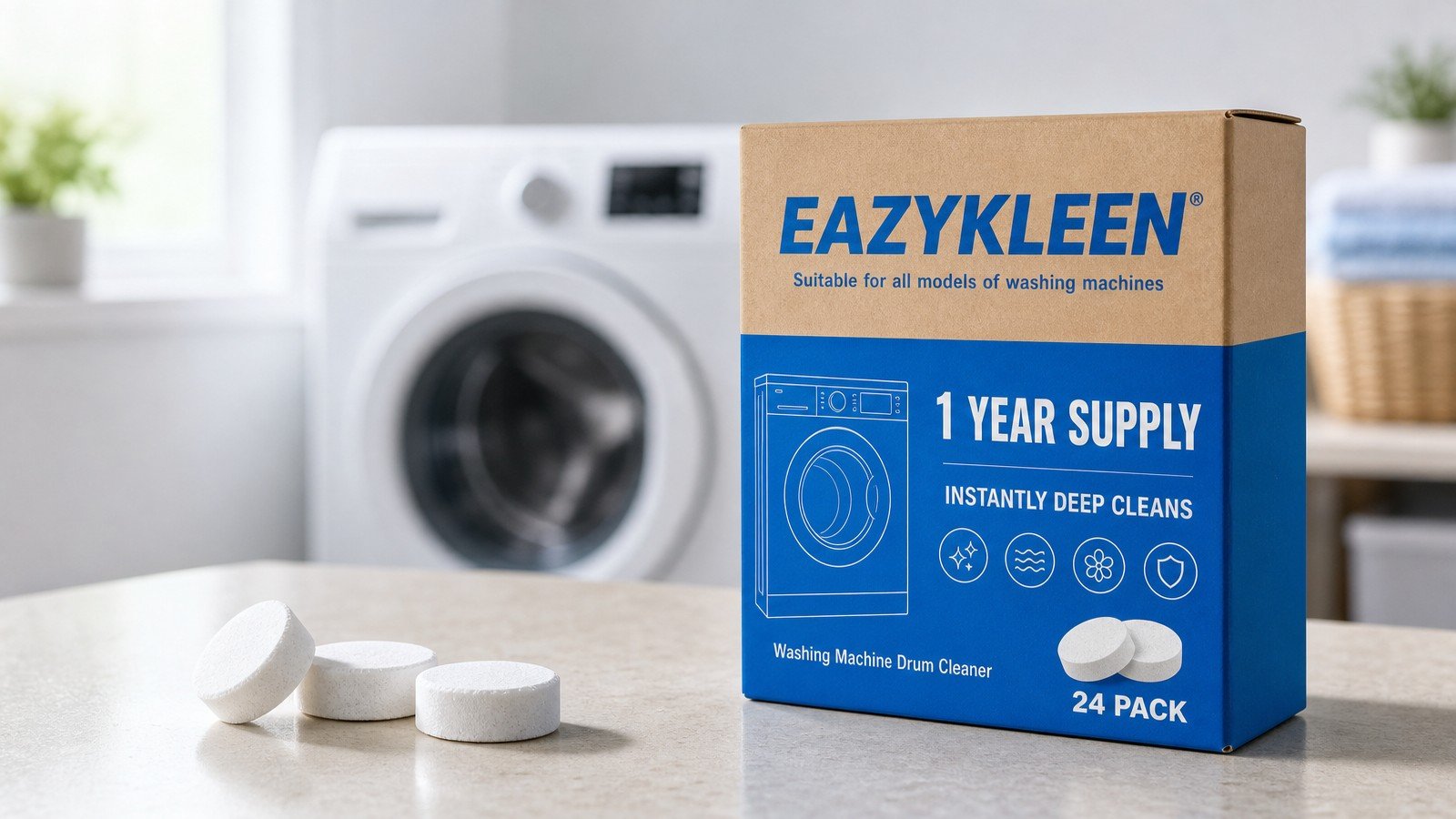
A washing machine cleaner is the maintenance product most brands overlook — it never touches fabric and has no immediate sensory payoff, yet it carries some of the highest repeat-purchase rates in appliance care. If you are sourcing a private label washing machine cleaner, this guide gives you the spec-level language you need: format, formulation, packaging, and the QC tests to put in writing before the first run.
What “Washing Machine Cleaner OEM” Actually Covers
A washing machine cleaner OEM program gives you control over three decisions: the format (tablet, powder, or liquid), the formulation (descaling and deodorizing actives plus optional fragrance), and the packaging. The factory executes against the spec you define.
What the product does (and doesn’t)
It targets the drum and hard-to-reach areas of the machine — not the laundry. It is designed to help break down detergent residue, fabric softener buildup, and limescale, and to help reduce odor at the source. It is a maintenance product, not a disinfectant and not a fabric care product. That distinction drives how you position it and what claims your label can carry.
OEM vs ODM for this category
In OEM, you specify format, formulation, fragrance, and packaging. In ODM, the factory offers a ready product you customize with scent and label. For the ownership difference in full, see OEM vs ODM for home care brands.
What your brand owns
Your brand owns the positioning: format, scent profile, pack size, and label. A cleaner fits naturally alongside a home care product range that already includes detergent sheets, scent beads, and dryer sheets OEM. For the dryer side of that cluster, see our dryer sheets OEM spec guide and laundry detergent sheets OEM guide.
Why Washing Machines Need a Dedicated Cleaner
Residue builds up in a washing machine from three sources: detergent and fabric softener that fail to rinse out, minerals from hard water that deposit as scale, and organic buildup that traps odor. A regular wash cycle — even a hot one — is not designed to break these deposits down, because detergent cleans fabric, not the machine.
Descaling vs deodorizing
These are two different mechanisms. A washing machine descaler works on mineral deposits (limescale) using acidic actives. A deodorizer targets odor-causing residue. Many retail products combine both, but know which your target market prioritizes — hard-water regions care more about descaling; odor-driven complaints care more about deodorizing.
What the product is NOT
A maintenance cleaner does not sanitize or disinfect, and it does not make bacteria-kill or fungus-prevention claims. If your label needs those claims, that is a different product class with different regulatory requirements. Keep your positioning to what the product can honestly support: helping remove buildup and reduce odor.
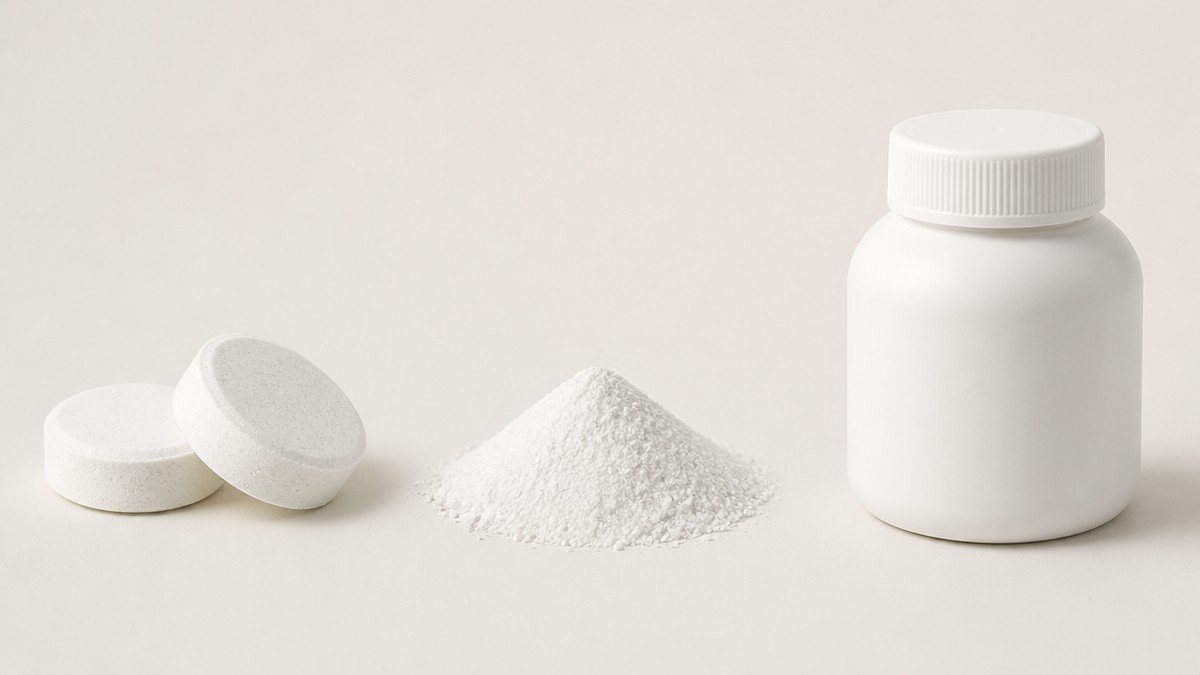
Tablet vs Powder vs Liquid: Which Format to Source
Format is the first sourcing decision, and it drives dosing, packaging, logistics, and shelf presentation.
Tablet formulation basics
Tablets are the easiest format to dose correctly — one tablet per empty cycle — and they present well at retail. They require a binding and compression step, so confirm the tablet dissolves fully across cold and hot cycles without leaving drum residue. The existing reference SKU is a 24-tablet box.
Powder dissolution behavior
Powder is typically lowest cost and allows flexible dosing, but dissolution is the risk — a powder that clumps leaves residue of its own. Ask for dissolution data across the water temperatures your market uses.
Liquid packaging weight and shelf life
Liquid works immediately but is heavier to ship and can separate over time. Confirm the container, closure, and stability window. For most private label launches, tablets are the default — they balance dosing, logistics, and shelf presence.
Formulation: Descaling, Deodorizing and Freshening
A formulation usually combines a descaling agent, cleaning actives that help break down residue, and an optional fragrance.
Active ingredients buyers should ask about
Ask what the descaling agent is, what the cleaning actives are, and what the formulation is tested to do. Get the performance claims in writing — what it is demonstrated to help remove, and under what conditions. Do not accept “strong cleaning power” as a specification.
Fragrance options and IFRA compliance
Fragrance is optional, and fragrance-free or low-scent versions are available for brands that want to avoid scent entirely. If you include fragrance, confirm it is covered by IFRA documentation and that an allergen statement can be provided. See how to read an IFRA certificate for what to check, and our scent booster beads sourcing guide for how fragrance decisions play out in the laundry category.
Ingredients Buyers Should Verify
Before you sign off on a formulation, confirm with your supplier:
- What the descaling agent is, and whether it fits your target market’s water conditions.
- Whether the formulation contains phosphates, and if that is a compliance issue for the markets you ship to.
- What fragrance, if any, is used, and whether it is IFRA-covered.
- Whether an allergen statement is available.
- Whether the ingredient profile is compatible with your packaging and dosing format.
Ask for the ingredient disclosure in writing. A supplier who will not disclose what is in the product — or what it is tested to do — is a sourcing risk.
Front-Load vs Top-Load: Formulation and Compatibility
The two washer types have different plumbing and different residue patterns, which affects compatibility claims.
Why front-loaders are more residue-prone
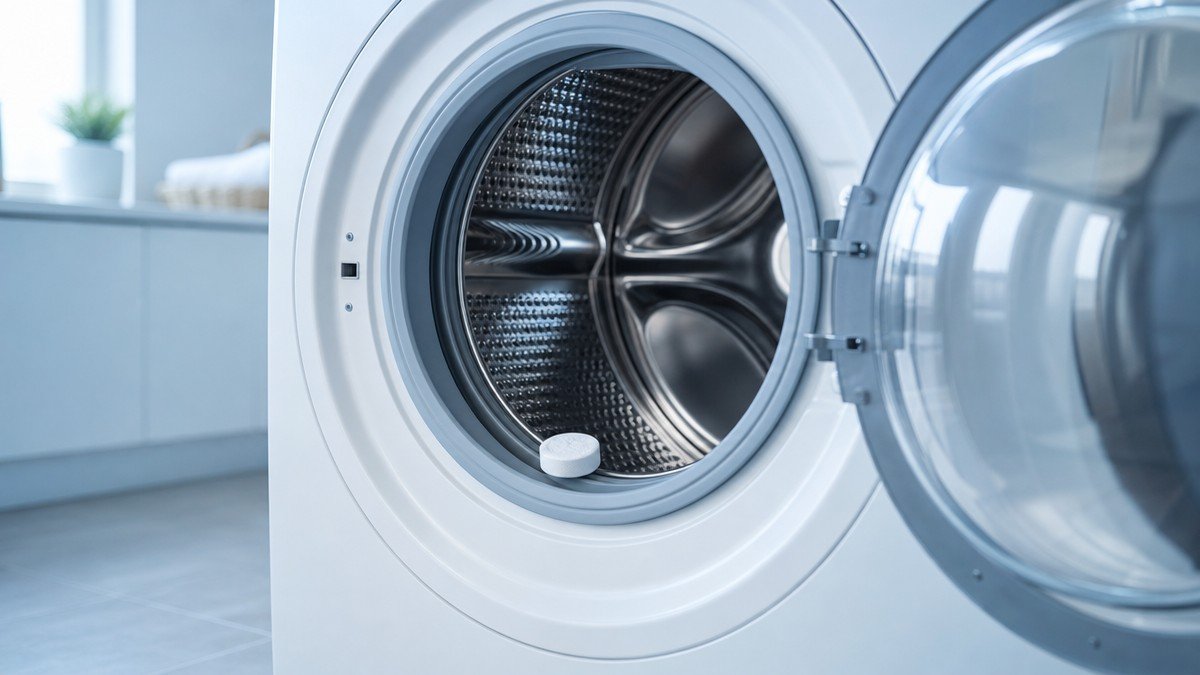
Front-load washers use less water, run cooler, and have a rubber door gasket that traps moisture and residue — which is why odor complaints concentrate there. A front-load cleaner needs to reach the gasket and the low-water residue zones.
Universal formulations vs machine-specific claims
Many formulations are positioned for both front-load and top-load machines. If you make a compatibility claim on the label, confirm it in writing and keep it to what the product is actually tested for. The existing reference SKU is described as suitable for both machine types — have your supplier verify that against test data before you repeat it on your own label.
Packaging: Box, Pouch and Retail Formats
Packaging turns a private label washing machine cleaner from a bulk chemical into a retail product.
Board box (existing SKU example)
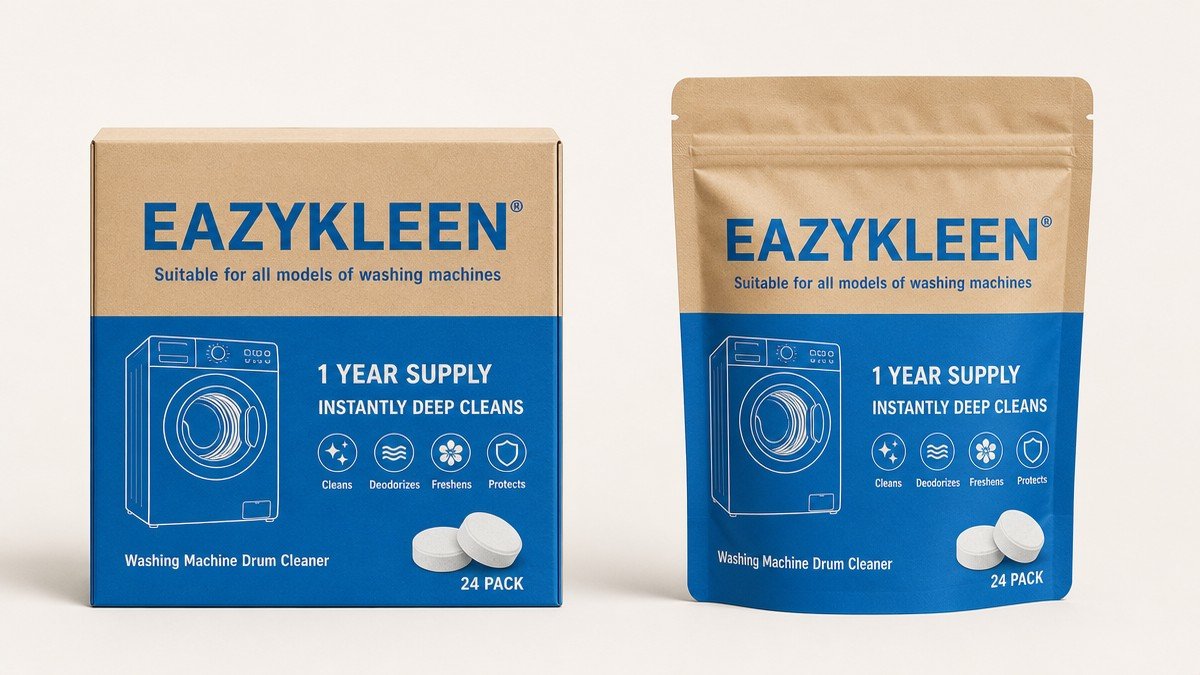
The existing reference SKU is a 24-tablet board box in a kraft-and-navy design. A rigid box stacks well, protects tablets in transit, and gives strong shelf presence — which matters for a product sold on convenience.
Stand-up pouch
A stand-up pouch is lighter and cheaper to ship, and works for value-tier or online-first positioning. The trade-off is less shelf rigidity and a reseal mechanism that must hold scent and moisture out. Big-box buyers often expect a box; e-commerce brands may prefer the pouch.
Artwork and barcode responsibility
Confirm who supplies artwork files, assigns the barcode, places regulatory text, and approves the print proof. In most OEM programs, the brand provides artwork and the factory prints and assembles. Confirm the print method early — it affects MOQ and color fidelity.
MOQ, Sampling and Lead Time
- MOQ — confirmed at quotation and varies by SKU and packaging format. A trial order below standard MOQ can often be arranged for first-time buyers. For the full private-label workflow from inquiry to shelf, see how private label home care products reach store shelves.
- Sampling vs. production lead time — confirm these separately. Sampling covers formulation and prototype packaging; production starts after spec approval and deposit.
- Lead time — confirmed in the quotation; regular orders typically run 2–4 weeks depending on order volume and packaging complexity. Confirm in writing before you place the order.
Documents Your Retail Buyer Will Ask For
Retail buyers — big-box or marketplace — will request the same document package before listing your product. Make sure your supplier can provide all four:
- SDS (Safety Data Sheet) — required for transport and workplace safety. See reading a cleaning product SDS for what each section should cover.
- IFRA certificate — confirms the fragrance meets International Fragrance Association safety standards.
- Allergen statement — lists declared allergens in the formulation.
- Third-party test report — verifies performance claims with independent lab data.
These are standard deliverables for a private label cleaner program. If a supplier cannot provide them per order, factor that gap into your risk assessment.
QC Tests to Put in Writing Before the First Run
Quality control needs to be documented before production starts. Ask your supplier to confirm these tests in writing.
Descaling efficacy test
A descaling test measures how much scale the product removes under controlled conditions. Ask for the method and pass criteria — not just “effective descaling.”
Odor reduction test
An odor reduction test measures the product against odor-causing residue in a controlled cycle. Ask what it is tested against and how the result is reported.
Tablet dissolution test
If you choose tablets, confirm they dissolve fully in both cold and hot cycles without residue. Dissolution failure is the most common tablet complaint, and it is preventable with a controlled formulation and compression spec.
Batch consistency
Request retention samples from each batch and compare against the approved reference over time. Check tablet integrity, scent intensity, and dissolution behavior. For the manufacturing controls behind consistent output, see our quality process.
FAQ
1. What format is best for private label washing machine cleaner — tablets, powder or liquid? Each has trade-offs: tablets offer convenient dosing and strong retail presentation (the existing 24-tablet box is a reference); powder is cost-efficient; liquid works immediately but is heavier to ship. Choose based on your target market’s preference and price band.
2. Can the cleaner be formulated fragrance-free? Yes. Scent can be customized, and fragrance-free or low-scent versions are available, with IFRA documentation and allergen statements provided.
3. Is the product compatible with both front-load and top-load washers? Per the existing product description, it is suitable for both front-load and top-load machines. Confirm specific compatibility during formulation and have the supplier verify any compatibility claim against test data.
4. What is the MOQ and lead time? Standard MOQ is confirmed at quotation based on SKU and packaging format, and a trial order below standard MOQ can often be arranged. Lead time is confirmed in the quotation; regular orders typically run 2–4 weeks depending on order volume and packaging complexity.
5. What documents come with the order? SDS, IFRA certificate, allergen statement, and third-party test report can be provided as project deliverables.
Planning a Washing Machine Cleaner SKU?
If you are building a private label washing machine cleaner line, bring three things to the conversation: your target market, your preferred format, and your estimated volume. We will map those to formulation, fragrance, and packaging options — and quote in one pass.